
KCET
Your Gateway to Professional Courses in Karnataka
KCET is your key to top-tier professional courses in Karnataka. Secure your future in engineering, medicine, and more!
Introduction to KCET
The KCET is a highly competitive and widely taken exam by students aspiring to pursue higher education in Karnataka. The exam is held in offline mode (pen-and-paper format) and consists of Multiple Choice Questions (MCQs). A good score in the KCET is essential for securing admission to top colleges in the state, making it a crucial step for many students. The KEA is the official body responsible for conducting the exam, from application and registration to the release of results and subsequent counseling process.
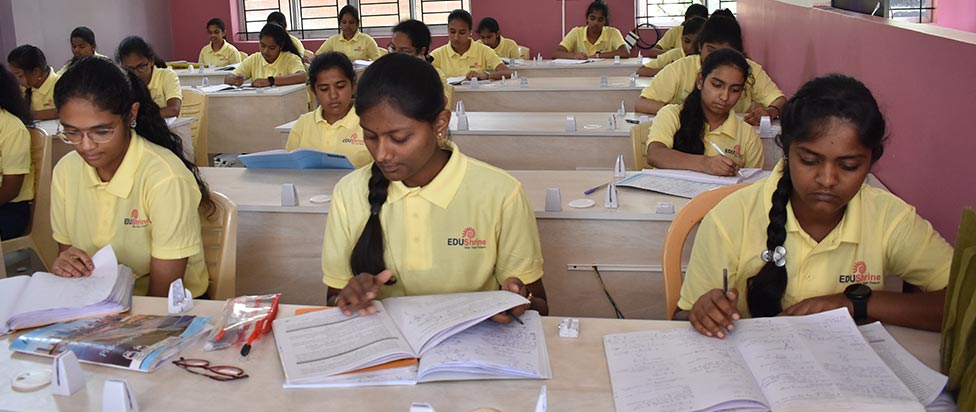
Eligibility Criteria
To be eligible for the KCET, candidates must meet specific criteria related to nationality, academics, and domicile. The general eligibility requirements are as follows:
- Nationality: Candidates must be citizens of India.
- Academic Qualification: Applicants must have passed the 10+2 (or 2nd PUC) examination or an equivalent from a recognized board.
- Mandatory Subjects: For Engineering and Technology courses, candidates must have studied Physics and Mathematics as compulsory subjects, along with Chemistry/Biotechnology/Biology/Electronics/Computer Science as an optional subject. English must also be one of the languages of study.
- Minimum Marks: A minimum aggregate of 45% marks in the optional subjects is required for the general category (40% for candidates belonging to SC/ST/Category-1 and other OBC categories).
- Domicile: Candidates must have studied for a minimum of seven academic years in a government or government-recognized educational institution in Karnataka, from the 1st standard to the 12th standard (or 2nd PUC). There are also specific clauses for wards of defense personnel, MPs from Karnataka, and those whose parents have studied in Karnataka for a minimum period of seven years.
Note: Specific eligibility criteria may vary depending on the course. For courses like Architecture, candidates are also required to have a valid score in JEE Main Paper-2 or NATA.
Exam Structure
The KCET exam pattern is designed to assess a candidate’s knowledge in core subjects. Here’s a breakdown of the structure:
- Mode of Exam: Offline (Pen-and-paper based).
- Medium of Language: English and Kannada.
- Question Type: Objective (Multiple Choice Questions – MCQs).
- Subjects: The exam is conducted for four subjects: Physics, Chemistry, Mathematics, and Biology.
- Number of Questions: Each subject paper consists of 60 questions.
- Total Marks: Each subject paper is worth 60 marks.
- Duration: Each subject paper is of 80 minutes duration.
- Marking Scheme:
- 1 mark is awarded for every correct answer.
- There is no negative marking for incorrect answers.
- No marks will be given for questions with multiple options marked.
- Kannada Language Test: A separate Kannada Language Test is conducted for Horanadu and Gadinadu Kannadiga candidates. This test is 60 minutes long and consists of 50 questions.
Courses Offered Through KCET
The KCET serves as the entry point for a wide range of undergraduate courses, including but not limited to:
Engineering & Technology
- Computer Science & IT
- Robotics & Mechatronics
- Chemical Engineering
- Data Science
- Mechanical Engineering
- Civil Engineering
- Electrical & Electronics Engineering (EEE)
- Electronics & Communication Engineering (ECE)
Paramedical Courses
- Pharm D (Pharmaciae Doctor)
- B. Pharma (Bachelor of Pharmacy)
- D. Pharma (Diploma in Pharmacy)
- B.Sc. Nursing
- BPT – Bachelor of Physio / Physical Therapy
- BOT – Bachelor of Occupational Therapy
- Prosthetic and Orthotic Engineering
- B.Sc. Audiology and Speech Therapy
- B.Sc. Ophthalmic Technology
- B.Sc. Radiography
- B.Sc. Nutrition & Dietetics
- B.Sc. Renal Dialysis Technology
- B.Sc. (Medical Laboratory Technology)
Other Courses
- MBBS (Bachelor of Medicine and Bachelor of Surgery)
- B.Sc. (Bachelor of Science) in Biological Sciences, Agricultural Sciences, Chemistry, Mathematics, Physics, and Veterinary Science
- BDS (Bachelor of Dental Surgery)
- BHMS (Bachelor of Homoeopathic Medicine & Surgery)
- BUMS (Bachelor of Unani Medicine & Surgery)
- BAMS (Bachelor of Ayurvedic Medicine & Surgery)